How Telescopes Work
From mirror designs to orbital mechanics, discover the engineering behind observing the invisible universe.
Reflecting vs Refracting Telescopes
Reflecting Telescope
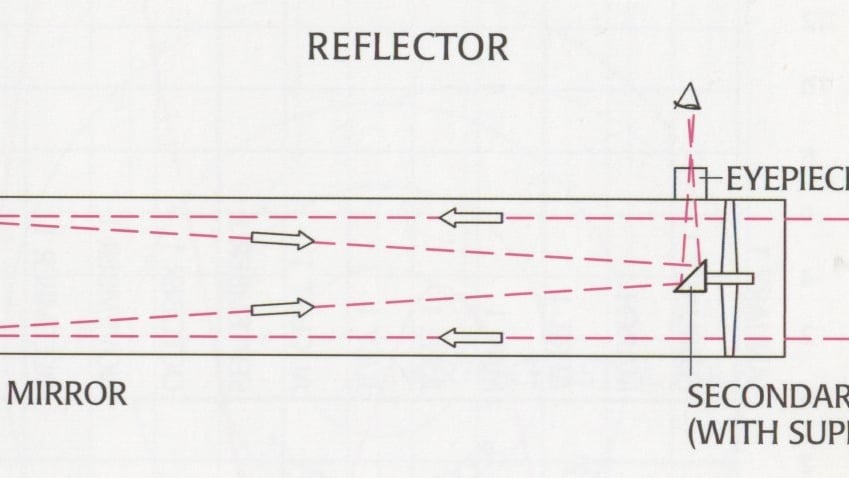
Light Path
Uses curved mirrors to collect and focus light. The primary mirror reflects light to a secondary mirror, directing it to instruments. All major space telescopes (Hubble, JWST, Chandra) are reflectors.
- No chromatic aberration
- Can be made very large
- Lighter than equivalent lenses
Refracting Telescope
Light Path
Uses glass lenses to bend (refract) light to a focal point. Effective but limited in size — large lenses are heavy, costly, and suffer from chromatic aberration.
- Suffers from chromatic aberration
- Heavy at large sizes
- Not used for modern space telescopes
Segmented Mirror Design
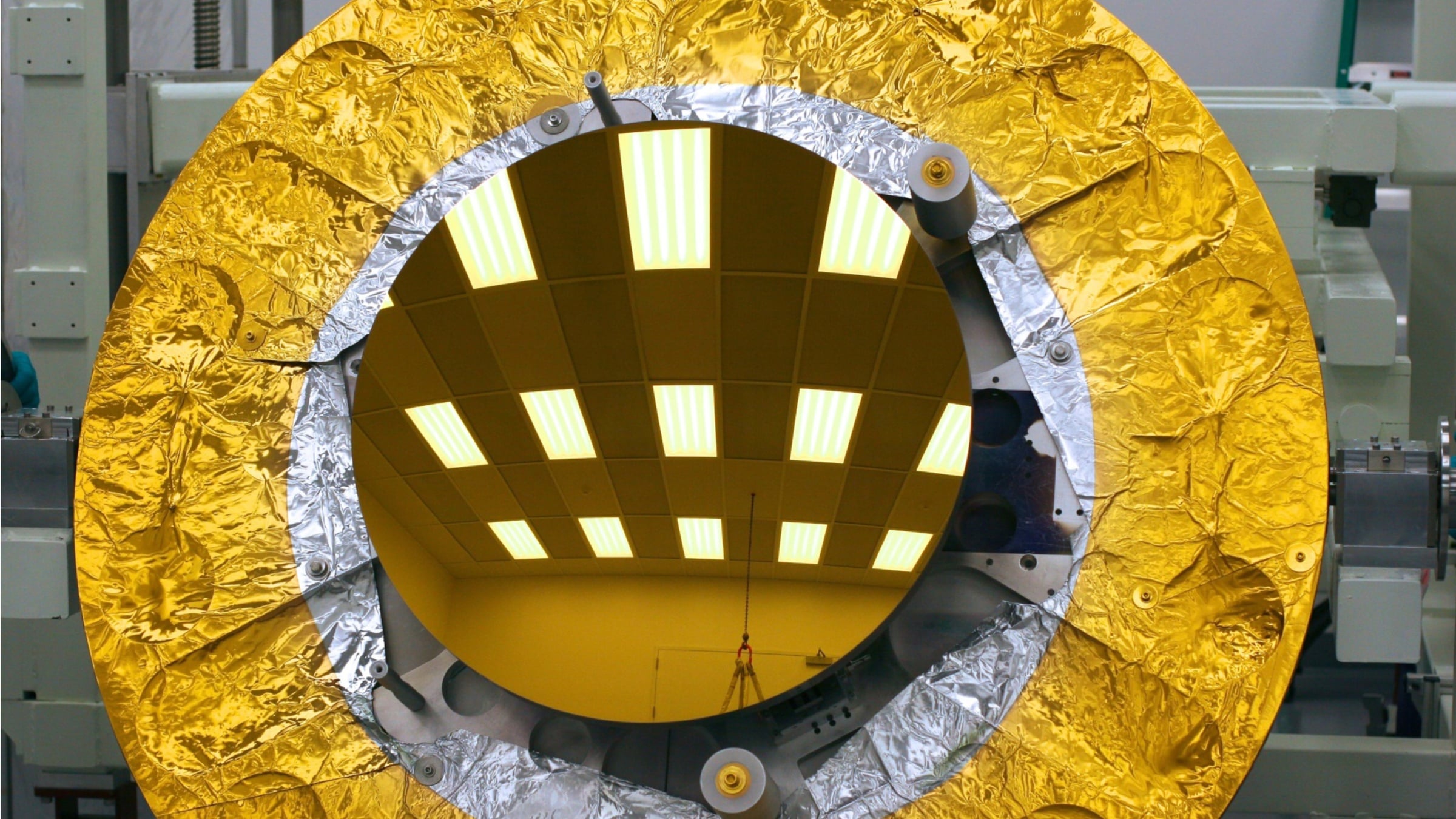
JWST’s primary mirror comprises 18 hexagonal segments made of beryllium coated in gold, working together as a single 6.5-meter mirror.
Why Hexagonal Segments?
JWST Sunshield & Detector Path
5-Layer Sunshield
The sunshield is tennis-court-sized and blocks sunlight, keeping instruments at -233°C (-387°F).
Each layer is made of Kapton®, as thin as a human hair, with vacuum gaps as insulation.
Light → Discovery Path
Orbit Locations: LEO vs L2
Low Earth Orbit (LEO)
Hubble orbits at ~540 km altitude. Close enough for servicing missions, but Earth blocks the view for half of each orbit, and radiation belts can interfere with instruments.
L2 Lagrange Point
JWST orbits the Sun at L2, 1.5 million km from Earth. Gravitational forces balance here, providing an unobstructed view and a stable, cold thermal environment — ideal for infrared observations.